Cart
Cart Products
Recombinant XRCC1 protein
| Aliases: RCC, SCAR26 |
| Catalog No: 82020 | Format: 20 µg | $505 | Add to Cart |
| Catalog No: 82620 | Format: 1 mg | $4,150 | Add to Cart |
Request a quote for a bulk order Request Quote
Expressed In: Baculovirus Protein Species: Human
Contents
A representative Technical Data Sheet (TDS) is provided here. Please refer to the lot-specific TDS you will receive with your order for the lot-specific buffer contents and protein concentration.
Background
XRCC1 (DNA repair protein XRCC1) also known as RCC and SCAR26. XRCC1 is a scaffold protein that is recruited to SSBs by PARP1 and/or PARP2 activity through direct interaction betweenpoly (ADP-ribose) and the central BRCT domain in XRCC1. XRCC1 in turn interacts with and recruits the enzymes required for SSB repair, including DNA polymerase β, DNA ligase III, polynucleotide kinase/phosphatase and aprataxin. Hereditarymutations in XRCC1 and some of these protein partners result inneurodevelopmental disorders and/or progressive neurodegeneration.
Application Notes
This product was manufactured as described in Protein Details. Where possible, Active Motif has developed functional or activity assays for recombinant proteins. Additional characterization such as enzyme kinetic activity assays, inhibitor screening or other biological activity assays may not have been performed for every product. All available data for this product is shown.
Protein Details
Recombinant XRCC1 protein that includes full length of human XRCC1 protein (accession number NP_006288.2) was expressed in Sf9 cells and contains an C-terminal His-FLAG tag with a molecular weight of 72.01 kDa. The purity of the protein is ≥ 80% by SDS-PAGE.
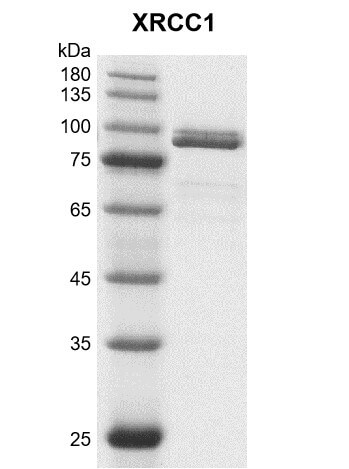
Recombinant XRCC1 protein gel.
XRCC1 protein was run on a 10% SDS-PAGE gel and stained with Coomassie Blue.
MW: 72.01 kDa
Purity: >80%
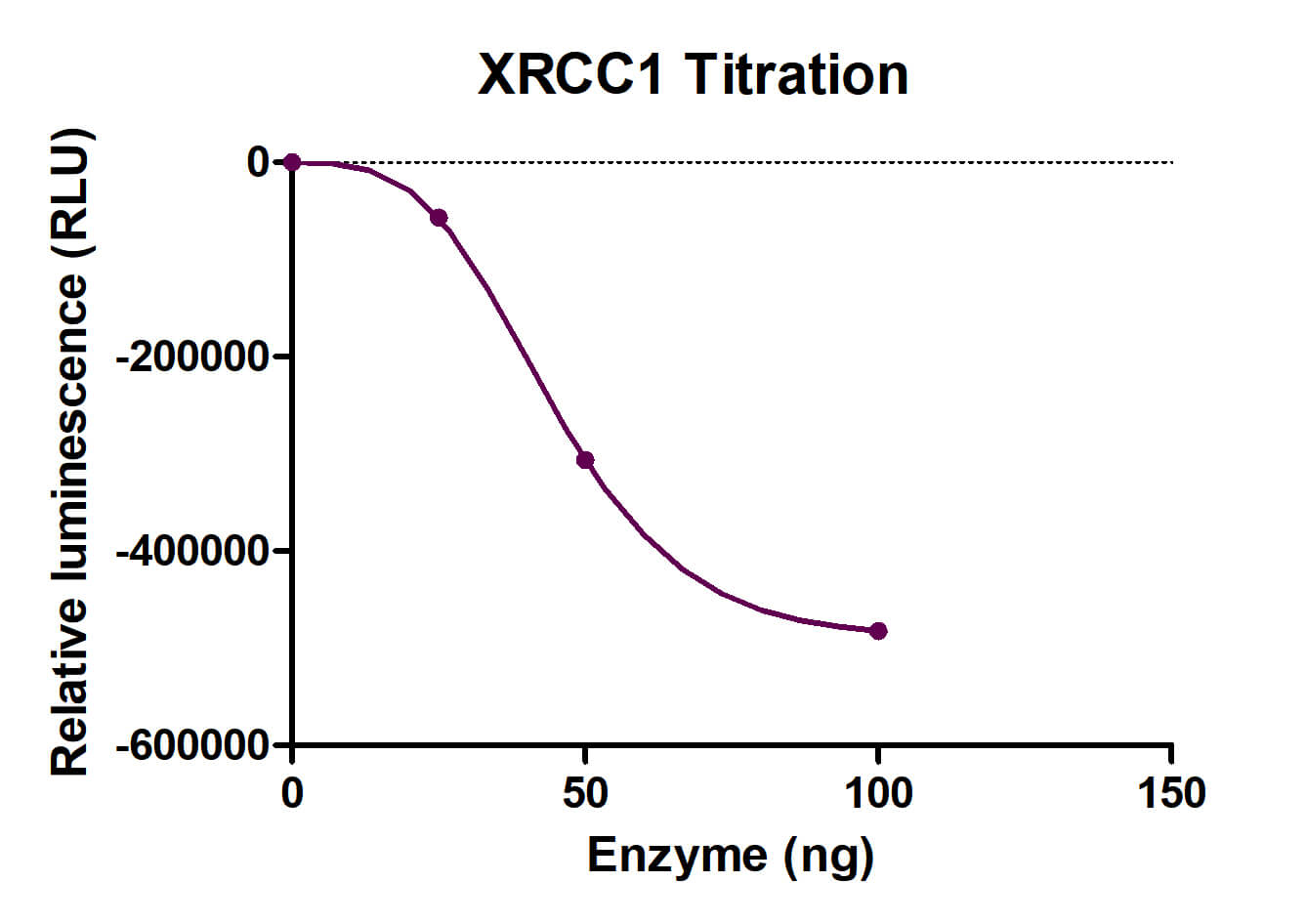
ELISA for XRCC1 activity
25 μM NAD-Biotin and Actived DNA were added into ELISA plate (coated with histone H2A and H2B mixture) with PARP1 in ADPR Buffer and incubated for 1 hour at room temperature. After washing, different concentrations of XRCC1 were added into each well and incubated in reaction buffer for 1 hour at room temperature. Following Streptavidin-HRP and ECL incubation, the plate was read in a luminometer or microtiter-plate reader.