Cart
Cart Products
<< Back to MOTIFvations Blog Home Page
Identifying Microglial PHD3 as A New Target for Alzheimer's Disease Therapies
August 24, 2026
Share ShareTable of Contents:
Microglia in Alzheimer's Disease: A Complex Transcriptional Landscape
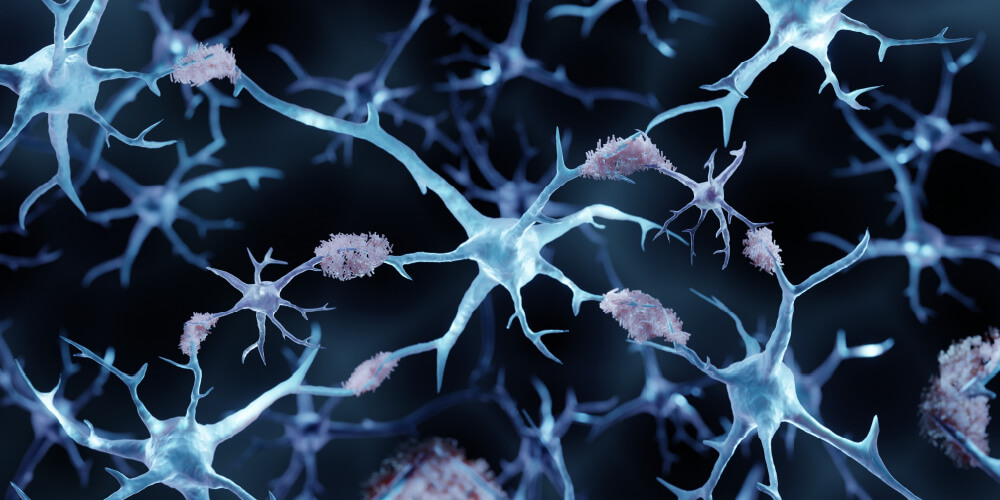
Microglia – the brain's resident macrophages - help to maintain brain homeostasis under normal conditions and contribute to responses to the local damage associated with neurodegenerative disorders (Tay et al. and Prinz et al.). Previous studies have established a link between Alzheimer's disease and microglia (Pimenova et al.), although data suggested that these all-important immune cells can protect but also contribute to disease progression through inflammatory processes. Of note, the presence of amyloid beta - the main component of the amyloid plaques found in the brains of Alzheimer's disease patients – induces a complex range of transcriptional responses in microglia; however, we lack a deep understanding of the transcriptional regulation mechanisms at play, their consequences, and the ultimate impact on disease development.
Researchers from the laboratories of Alicia E. Rosales-Nieves and Alberto Pascual (Universidad de Sevilla) previously reported that endothelial cell loss at sites of amyloid beta plaques induced a hypoxia-inducible factor 1 (HIF1)-mediated transcriptional program in amyloid beta plaque-associated microglia and that HIF1 activity in a hypoxic environment limited microglial defenses to disease (March-Diaz et al. and Alvarez-Vergara et al.). Additional related studies also revealed that HIF1 activity promotes inflammation in monocyte-derived cells (Cramer et al. and Tannahill et al.) and induces a metabolic adaptation that may contribute to the dysfunction of amyloid beta plaque-associated microglia (Baik et al. and Wendeln et al.). The prolyl hydroxylase domain-containing proteins 1-3 (PHD1-3) - also known as Egl-9 family hypoxia inducible factors 1-3 (EGLN1-3) - function as cellular oxygen sensors and regulate the levels of the HIF transcription factor proteins and, as such, the expression of hypoxia-inducible genes. Interestingly, the HIF1-target gene Egln3 (which encodes PHD3) represents one of the most upregulated transcripts present in amyloid beta plaque–associated microglia (March-Diaz et al.). In addition, studies have revealed that PHD3 interacts with the Forkhead box O3 (FOXO3) transcription factor in amyloid beta plaque-associated microglia (Rodriguez et al.), with FOXO3 also known to boost inflammatory responses in human induced pluripotent stem cell–derived microglia in combination with HIF1 (Sun et al.). These findings (and more!) raise the question: do HIF1, PHD3, and FOXO3 function together to mediate pathological microglial function during the development of Alzheimer's disease?
To cut through this complex landscape and find an answer to this vexing question, the Rosales-Nieves and Pascual labs aimed to comprehensively characterize the roles of HIF1, PHD3, and FOXO3 in amyloid beta plaque-associated microglia and define how they may contribute to the progression of Alzheimer's disease. Now, they reveal that: i) the presence of soluble oligomeric aggregates of amyloid beta induces the expression of HIF1A, PHD3, and pro-inflammatory type I interferon signature genes in microglia; and that ii) this response depends on PHD3. Interestingly, their new study – reported recently in Science Advances and summarized below – now suggests that the inactivation of the PHD3-FOXO3 axis may ameliorate the microglial response to oligomeric aggregates of amyloid beta and, as such, improve Alzheimer's disease outcomes (Sanchez-Garcia, Lara-Ureña, and March-Diaz et al.).

Cutting Through a Complex Landscape to Reveal the Importance of the PHD3-FOXO3 pathway
In the first part of this exciting study, the authors revealed that HIF1 could directly activate Egln3 transcription and PDH3 expression in amyloid beta plaque–associated microglia; furthermore, they discovered that the induced expression of HIF1A and PHD3 in response to oligomeric aggregates of amyloid beta exposure reduced FOXO3 stability in primary microglial cultures, thereby prompting the transcriptional upregulation of a pro-inflammatory type I interferon signature. Overall, these data highlighted FOXO3's role as a repressor of pro-inflammatory gene expression, a finding that confirms previous studies (Litvak et al.).
Subsequent analysis in an Alzheimer's disease mouse model revealed that PHD3 loss abolished the induction of the type I interferon signature in amyloid beta plaque–associated microglia; in addition, the team revaled that the lack of PHD3 improved microglial responses to amyloid beta (by activating the disease-associated microglia signature, increasing microglial proximity to amyloid beta plaques, and enhancing the phagocytosis of amyloid beta and small plaques), decreased local axonal pathology, and, encouragingly, recovered behavioral deficits. To confirm these findings, the authors finally overexpressed PHD3 in microglia, demonstrating that PHD3 expression sufficed to induce the pro-inflammatory type I interferon signature and alter mouse brain function/behaviour in the absence of amyloid beta pathology.
PHD3: A Target for the Development of Microglia-targeted Alzheimer's Disease Treatments?
Based on the findings of this exciting study, the authors propose that microglia in Alzheimer's disease patients may suffer from a "maladaptive" pro-inflammatory response induced through the the PHD3-FOXO3 pathway, where microglial cells become activated in the absence of an appopriate threat (Rock et al.); therefore, specifically modulating the activity of the the PHD3-FOXO3 pathway in microglial cells could represent an exciting target for the development of novel therapeutics for Alzheimer's disease patients. If this study has piqued your interest, the Active Motif catalog includes PHD1, PHD2, and PHD3 recombinant proteins; AbFlex® PHD1 (EGLN2) and PHD2 (EGLN1) antibodies; the FLAG-Tag Recombinant PHD3 (EGLN3) protein; and a range of HIF-1 products.
About the author
Stuart P. Atkinson, Ph.D.
Stuart was born and grew up in the idyllic town of Lanark (Scotland). He later studied biochemistry at the University of Strathclyde in Glasgow (Scotland) before gaining his Ph.D. in medical oncology; his thesis described the epigenetic regulation of the telomerase gene promoters in cancer cells. Following Post-doctoral stays in Newcastle (England) and Valencia (Spain) where his varied research aims included the exploration of epigenetics in embryonic and induced pluripotent stem cells, Stuart moved into project management and scientific writing/editing where his current interests include polymer chemistry, cancer research, regenerative medicine, and epigenetics. While not glued to his laptop, Stuart enjoys exploring the Spanish mountains and coastlines (and everywhere in between) and the food and drink that it provides!
Contact Stuart on X with any questions
Related Articles
Artificial Intelligence Helps to Identify a Novel PHD1/2 Inhibitor as a Potential Treatment for Inflammatory Bowel Disease

August 3, 2026
A study uses artificial intelligence to identify a novel PHD1/2 inhibitor, demonstrating a safe and effective approach to treating inflammatory bowel disease.
Read More
New TET2 Research Describes a New Chromatin-Regulation Pathway and a Novel Cancer Target
June 11, 2026
A new vulnerability in TET2-mutant leukemia has emerged. Targeting MBD6 significantly impaired leukemia cell growth and reversed disease-related defects in mouse models, opening the door to novel treatment strategies.
Read More
<< Back to MOTIFvations Blog Home Page