Cart
Cart Products
Recombinant SMARCAL1 protein
| Aliases: SWI/SNF-related, Matrix-associated, actin-dependent regulator of chromatin, subfamily A-like 1 |
| Catalog No: 82169 | Format: 20 µg | $480 | Add to Cart |
| Catalog No: 82769 | Format: 1 mg | $4,150 | Add to Cart |
Request a quote for a bulk order Request Quote
Applications
Contents
A representative Technical Data Sheet (TDS) is provided here. Please refer to the lot-specific TDS you will receive with your order for the lot-specific buffer contents and protein concentration.
Application Notes
This product was manufactured as described in Protein Details. Where possible, Active Motif has developed functional or activity assays for recombinant proteins. Additional characterization such as enzyme kinetic activity assays, inhibitor screening or other biological activity assays may not have been performed for every product. All available data for this product is shown.
References
Human
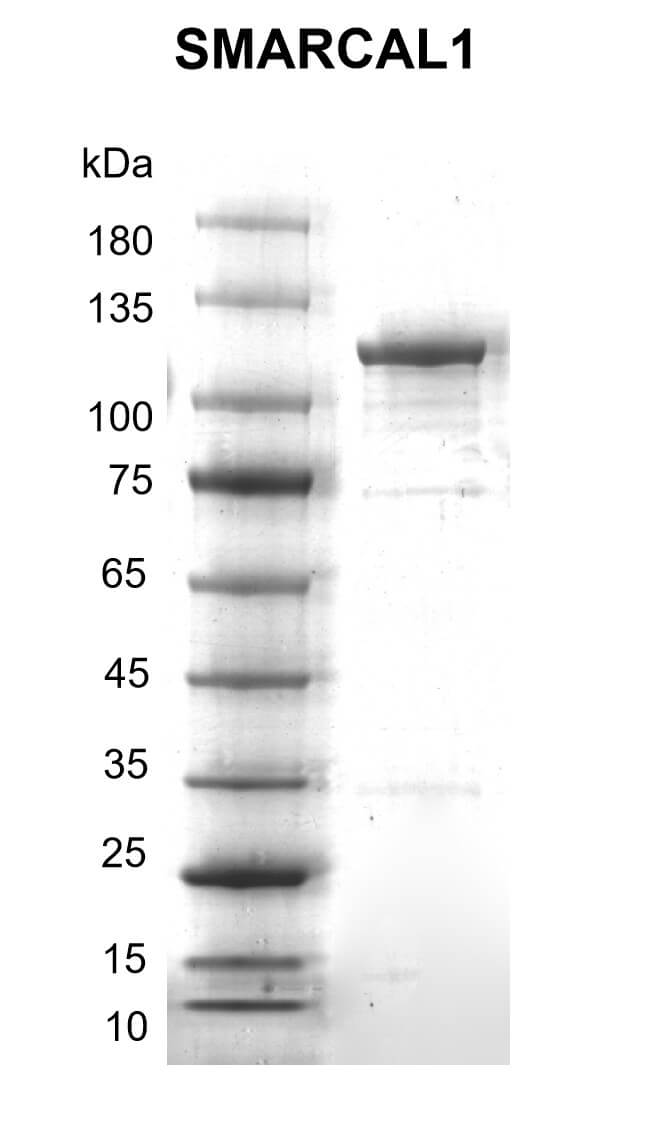
Recombinant SMARCAL1 protein gel
4-20% SDS-PAGE gel
MW:107.2 kDa
Purity: >90%
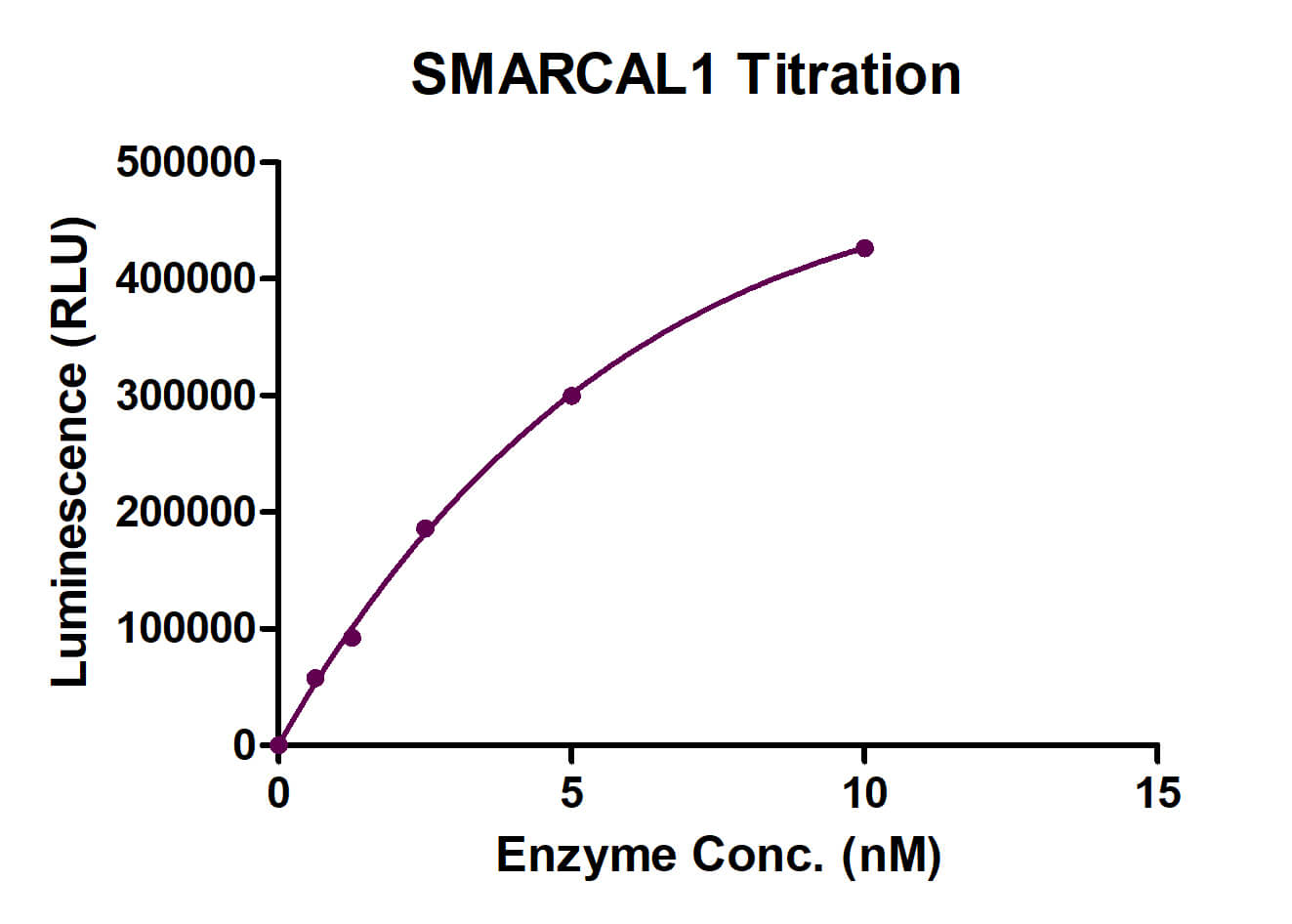
ADP-Glo assay for SMARCAL1 activity
20 µM ATP and 10 nM Salmon sperm DNA was incubated with different concentrations of SMARCAL1 protein in a 10 µl reaction system containing 20 mM HEPES (pH 7.5) ,10mM MgCl2, 50 mM NaCl, 0.1%Tween-20, 1 mM DTT at RT for 1 hour, then add 10 µl ADP-Glo Reagent incubates at RT for 1 hour. Then
add 20 µl Kinase Detection Reagent incubates at RT for 1 hour. Finally, Luminescence measurement is collected by BMG.
Background
SMARCAL1 (SWI/SNF-related, matrix-associated, actin-dependent regulator of chromatin, subfamily A-like 1) , also known as HARP (HepA-related protein) or ALDH1L2 pseudogene, is an ATP-dependent annealing helicase that plays a critical role in DNA replication stress responses and genome stability maintenance. This protein binds to replication forks and catalyzes the reannealing of complementary single DNA strands, thereby preventing fork collapse and facilitating replication restart under stress conditions such as replication fork stalling, DNA damage, or secondary structure formation. Through its interactions with RPA and other replication fork remodeling factors, SMARCAL1ensures proper fork progression and protects genome integrity, with mutations in the SMARCAL1 gene leading to Schimke immuno-osseous dysplasia, a multisystem disorder characterized by growth retardation, renal dysfunction, and T-cell immunodeficiency.
Storage
Recombinant proteins in solution are temperature sensitive and must be stored at -80°C to prevent degradation. Avoid repeated freeze/thaw cycles and keep on ice when not in storage.
Guarantee
This product is for research use only and is not for use in diagnostic procedures. This product is guaranteed for 6 months from date of arrival.
Application Key
- ChIP = Chromatin Immunoprecipitation;
- ChIP = ChIP Sequencing;
- CUT&RUN = Cleavage Under Targets and Release Using Nuclease;
- CUT&Tag = Cleavage Under Targets and Tagmentation;
- DB = Dot Blot;
- ELISA = Enzyme-linked Immunosorbent Assay;
- EMSA = Electrophoretic Mobility Shift Assay
- FC = Flow Cytometry;
- ICC = Immunocytochemistry;
- IF = Immunofluorescence;
- IHC = Immunohistochemistry;
- IP = Immunoprecipitation;
- MeDIP = Methyl-DNA Immunoprecipitation;
- NEU = Neutralizing;
- TIP-ChIP = Tagmented, Indexed, and Pooled Chromatin Immunoprecipitation;
- WB = Western Blotting