Cart
Cart Products
Recombinant PARP2 protein
| Aliases: ARTD2, ADPRT2, ADPRTL2, ADPRTL3, pADPRT-2 |
| Catalog No: 82124 | Format: 20 µg | $505 | Add to Cart |
| Catalog No: 82724 | Format: 1 mg | $4,500 | Add to Cart |
Request a quote for a bulk order Request Quote
Expressed In: Baculovirus Protein Species: Human
Contents
A representative Technical Data Sheet (TDS) is provided here. Please refer to the lot-specific TDS you will receive with your order for the lot-specific buffer contents and protein concentration.
Background
PARP2, or poly(ADP-ribose) polymerase 2, is an enzyme involved in DNA repair and other cellular processes. It is a member of the ADP-ribosyltransferase (ART) family and is activated by DNA damage. PARP2 plays a key role in the formation of branched poly(ADP-ribose) (PAR) chains, which are involved in chromatin modifications and DNA repair.
Application Notes
This product was manufactured as described in Protein Details. Where possible, Active Motif has developed functional or activity assays for recombinant proteins. Additional characterization such as enzyme kinetic activity assays, inhibitor screening or other biological activity assays may not have been performed for every product. All available data for this product is shown.
Protein Details
Recombinant PARP2 protein was expressed in a baculovirus expression system as the full length protein (accession number NP_005475.2) with an N-terminal FLAG tag. The molecular weight of PARP2 is 67.48 kDa.
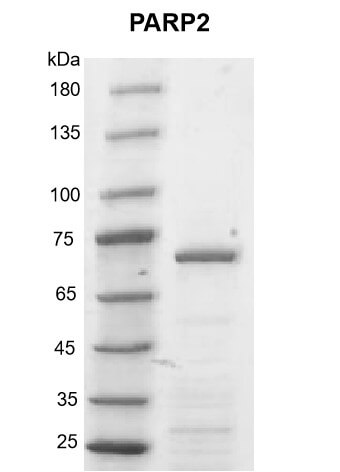
Recombinant PARP2 protein gel
10% SDS-PAGE gel
MW: 67.48
Purity: >95%
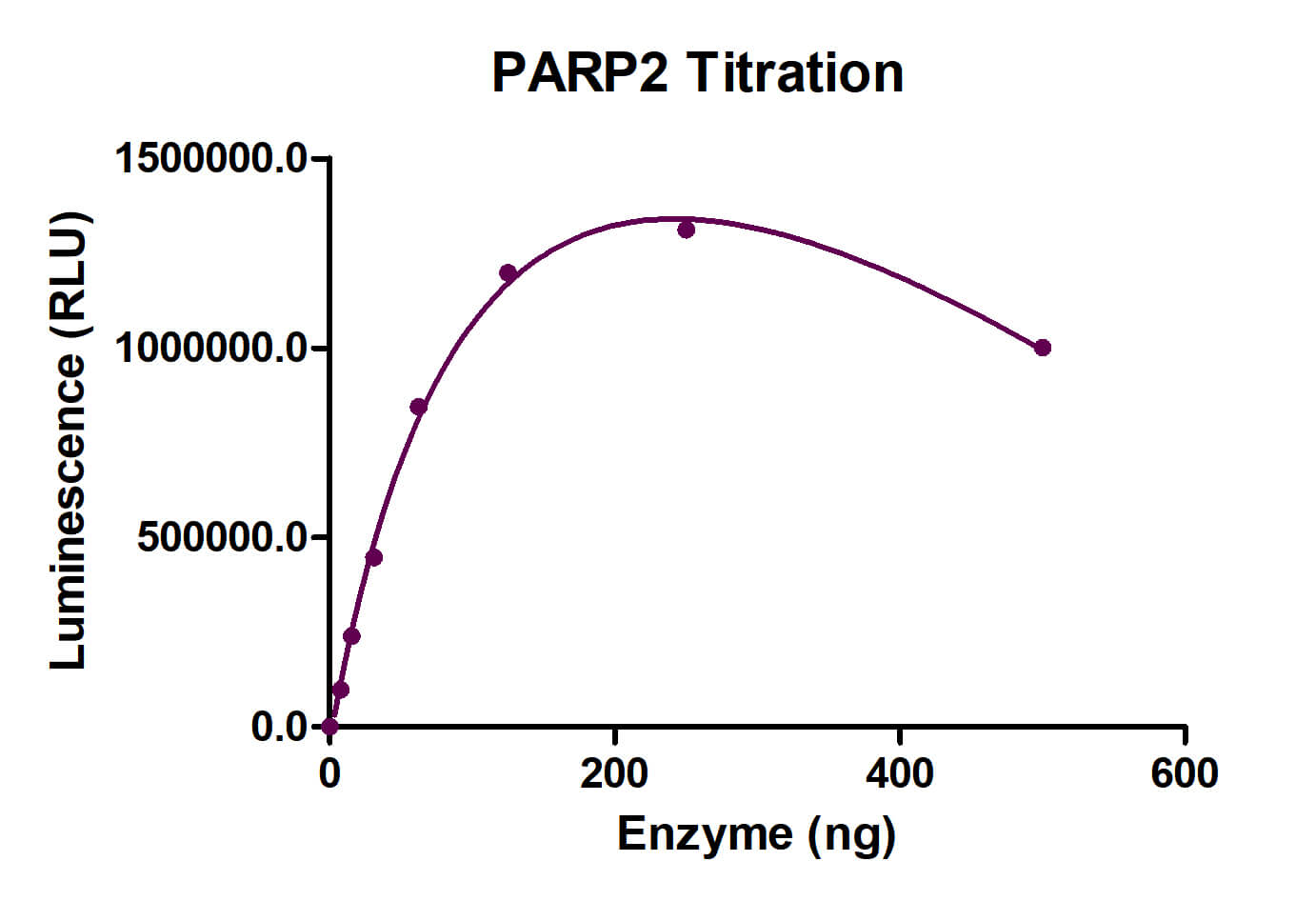
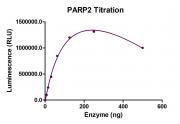
ELISA for PARP2 activity
25 μM NAD-Biotin and Actived DNA were added into ELISA plate (coated with histone H2A and H2B mixture) with PARP2 in ADPR Buffer and incubated for 1 hour at room temperature. Following Streptavidin-HRP and ECL incubation, the plate was read in a luminometer or microtiter-plate reader.
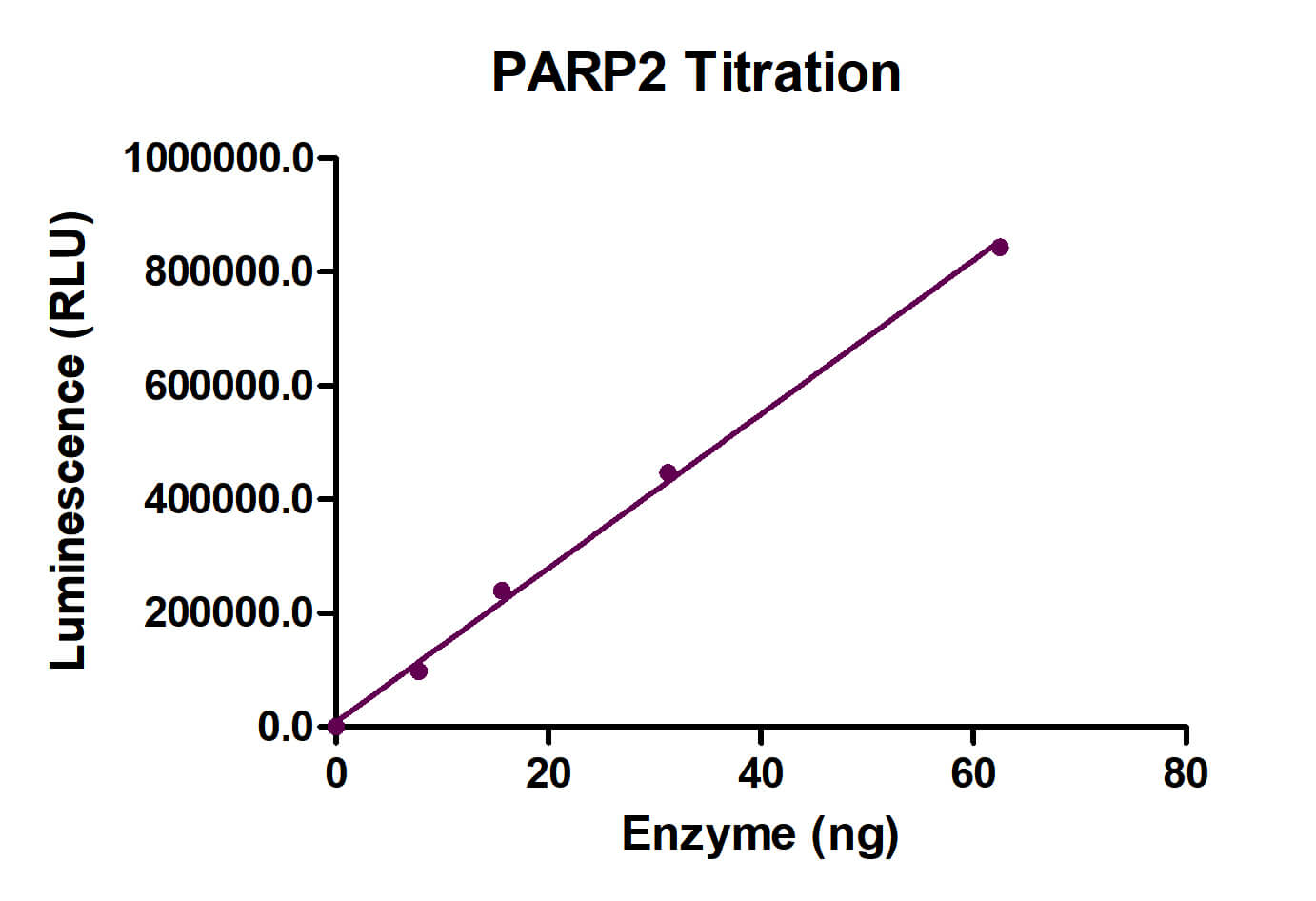
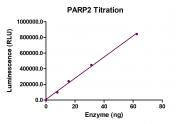
ELISA for PARP2 activity
25 μM NAD-Biotin and Actived DNA were added into ELISA plate (coated with histone H2A and H2B mixture) with PARP2 in ADPR Buffer and incubated for 1 hour at room temperature. Following Streptavidin-HRP and ECL incubation, the plate was read in a luminometer or microtiter-plate reader.
Storage
Recombinant proteins in solution are temperature sensitive and must be stored at -80°C to prevent degradation. Avoid repeated freeze/thaw cycles and keep on ice when not in storage.
Guarantee
This product is for research use only and is not for use in diagnostic procedures. This product is guaranteed for 6 months from date of arrival.